- ZHUHAI JIALI HARDWARE CO.,LTD.
- +86-756-8586520

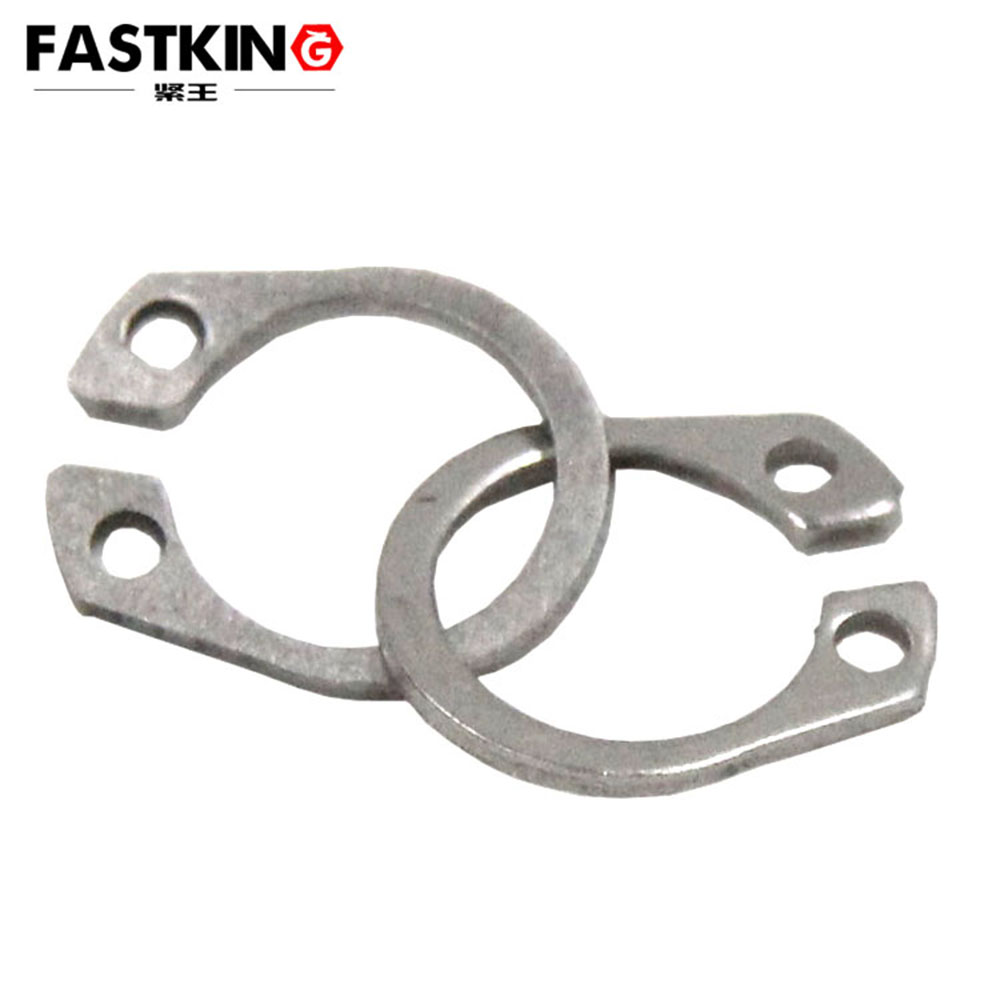
Elastic ring for A-type shaft gb894.1/din471
- Product description:
The core of the Axial Elastic Retainer Ring Type A lies in its "open annular structure and elastic deformation adaptability". It is a thin annular component overall, with a single opening on one side of the ring body. Tiny "installation lugs" are often designed at both ends of the opening (some models have no installation lugs, and the opening is expanded using a special tool). The edges of the ring body are chamfered to avoid scratching the shaft surface or connected components during installation.
Compared with rigid shaft retainer rings, the biggest difference lies in its "elastic material and open design". Elastic materials (such as 65Mn spring steel) endow the retainer ring with good deformation ability, and the open design eliminates the need to slide it from the end of the shaft. Instead, the opening can be directly expanded with a tool, allowing the retainer ring to be laterally snapped into the prefabricated annular groove on the shaft, greatly simplifying the assembly process. Taking the Axial Elastic Retainer Ring Type A of M10 specification as an example, its outer diameter is only 15mm, thickness is 1mm, and weight is less than 2g. It can easily adapt to scenarios with small shaft diameters and narrow spaces (such as micro-motor shafts and home appliance rotating shafts) without interfering with surrounding components, perfectly meeting the "miniaturized" assembly requirements.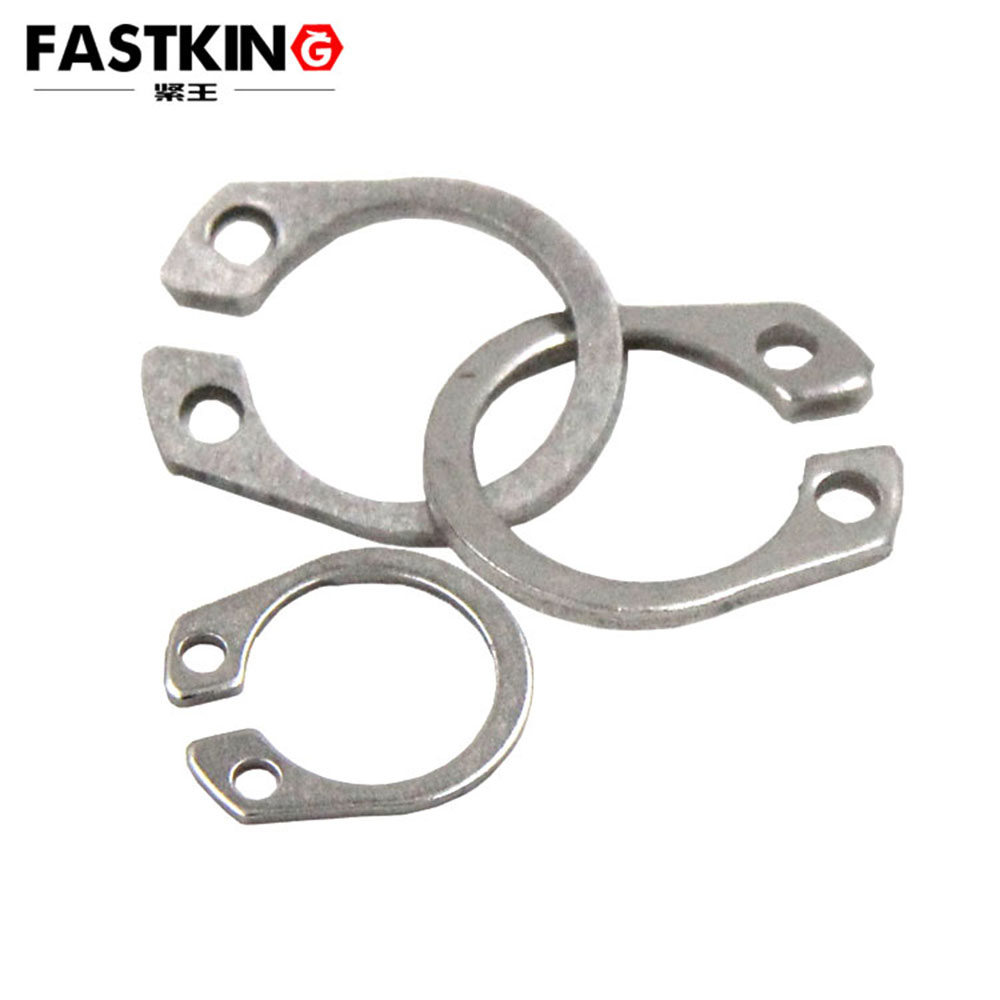
The installation method of the Axial Elastic Retainer Ring Type A is highly "convenient and efficient", which is one of the key reasons for its wide application. No complex tools are required for installation—only a special circlip plier (internal straight-jaw circlip plier) is needed: insert the jaws of the circlip plier into the opening or installation lugs of the retainer ring, gently apply force to expand the retainer ring so that its inner diameter is slightly larger than the shaft diameter, then align the retainer ring with the annular groove on the shaft, and release the circlip plier. The retainer ring will return to its original shape by its own elasticity, fit tightly against the groove wall, and the installation is completed.
The entire process takes only 3-5 seconds. Compared with the axial bolt retainer ring, which requires tightening bolts for fixation, the assembly efficiency is increased by 5-8 times. It is particularly suitable for batch assembly in automated production lines—for example, in the production of automobile windshield wiper motors, the retainer rings for the motor shafts of dozens of units can be installed per minute, significantly reducing labor costs and production cycles. In addition, disassembly is equally convenient: the retainer ring can be removed by expanding it again with the circlip plier, and it can be reused (provided that its elasticity has not deteriorated), further reducing the use cost.
"Precise axial positioning" is the core function of the Axial Elastic Retainer Ring Type A, and its positioning effect relies on the "precise matching between the retainer ring and the shaft groove". According to the GB/T 894.1 standard, strict tolerance requirements are imposed on the inner diameter, outer diameter, thickness, and opening width of the Axial Elastic Retainer Ring Type A. Taking the retainer ring with a nominal diameter d=12mm as an example, the inner diameter tolerance is ±0.1mm, and the thickness tolerance is ±0.05mm. This ensures that after the retainer ring is snapped into the shaft groove, it will not loosen due to excessive clearance, nor will it cause deformation of the shaft groove due to excessive interference.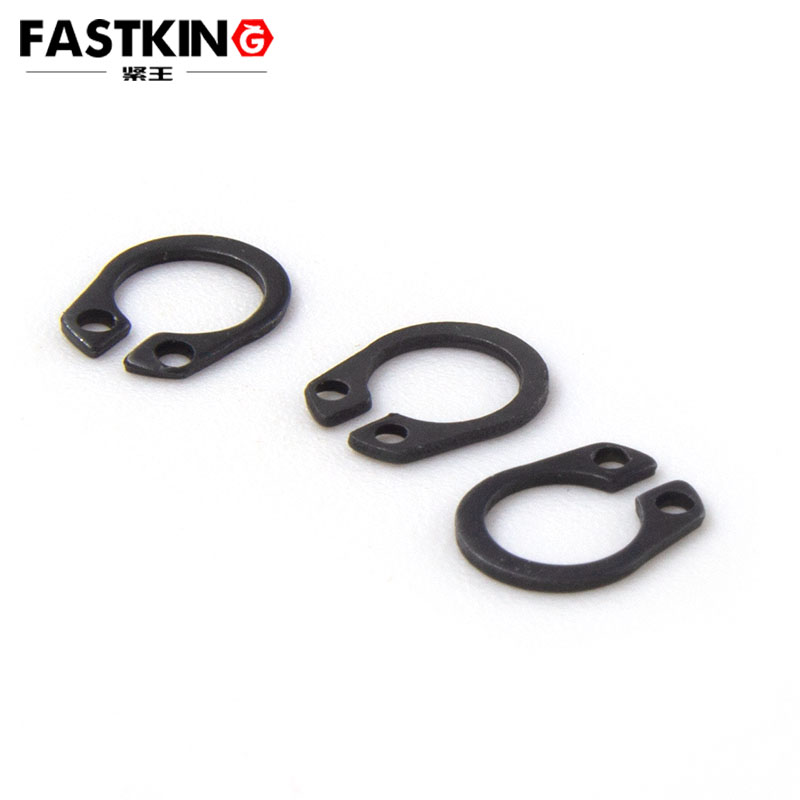
When the components on the shaft (such as gears, bearings, and washers) tend to move axially, the retainer ring will form a rigid barrier through the tight fit between the ring body and the shaft groove, limiting the axial displacement of the components. For example, on the motor shaft of power tools (such as electric drills), an Axial Elastic Retainer Ring Type A is installed on the outer side of the bearing. When the motor operates at high speed, the bearing will be subjected to axial force, and the retainer ring can effectively prevent the bearing from moving axially, ensuring the dynamic balance performance of the motor and avoiding noise or vibration caused by bearing deviation. On the paper feed roller shaft of a printer, the retainer ring is used to position the rubber roller of the paper feed roller, preventing the rubber roller from moving axially during rotation and ensuring the flatness of printed paper.
The "adaptability" of the Axial Elastic Retainer Ring Type A has been fully verified in different industrial scenarios, and it is necessary to select appropriate materials and specifications according to the characteristics of the scenario. In conventional industrial scenarios (such as machine tool accessories and ordinary motors), retainer rings made of 65Mn spring steel are mostly used. After heat treatment, their hardness can reach HRC42-48, with good elasticity and low cost, which can meet the requirements of conventional loads.
In humid or slightly corrosive scenarios (such as bathroom equipment and kitchen appliances), retainer rings made of 304 stainless steel are selected. The oxide protective film on their surface can resist erosion by moisture and oil stains, preventing the retainer ring from rusting and thus causing elasticity degradation. In scenarios with high hygiene requirements (such as food machinery and medical equipment), retainer rings made of 316 stainless steel are used, which have stronger corrosion resistance and meet the standards for food contact and medical hygiene without producing harmful substances.
When selecting specifications, focus should be placed on the "shaft groove size"—the thickness of the retainer ring must be consistent with the depth of the shaft groove (e.g., if the retainer ring thickness is 1mm, the shaft groove depth should also be 1mm) to ensure that the retainer ring does not protrude from the shaft surface after installation. The inner diameter of the retainer ring must match the shaft diameter at the shaft groove; if it is too large, the retainer ring will easily loosen, and if it is too small, the installation difficulty will increase.
The Axial Elastic Retainer Ring Type A also has certain "application limitations", and risks should be avoided during selection. Firstly, its load-bearing capacity is limited—it is only suitable for scenarios with axial static loads or slight dynamic loads. If the axial load is too large (such as the transmission shaft of heavy machinery), it may cause deformation or fracture of the retainer ring. In such cases, rigid shaft retainer rings or other positioning methods should be used.
Secondly, its temperature resistance is relatively poor—the maximum temperature resistance of ordinary spring steel retainer rings is about 150℃, and that of stainless steel retainer rings is about 200℃, so they cannot be used in high-temperature scenarios (such as the exhaust pipe shaft of engines). Finally, it has high requirements for the machining accuracy of the shaft groove. If the depth and width of the shaft groove have excessive deviations, or the surface roughness of the shaft groove is too high, the installation stability and positioning effect of the retainer ring will be affected, increasing the risk of shaft system failure.
Despite these limitations, the Axial Elastic Retainer Ring Type A is still one of the "most cost-effective miniature positioning components" in industrial assembly. From micro-motors to large home appliances, from auto parts to medical equipment, it guards the axial stability of countless shaft components with its "small yet precise" characteristics, and has become an indispensable "miniature guardian" in shaft transmission.
As the manufacturing industry moves towards "lightweight" and "miniaturized" development, the Axial Elastic Retainer Ring Type A is also constantly upgrading—for example, laser cutting is used to improve dimensional accuracy, and new elastic alloy materials are introduced to enhance temperature resistance and corrosion resistance, so as to adapt to more harsh application scenarios. In the future, it will continue to play an important role in the industrial fastening field with its advantages of high efficiency, convenience, and low cost, providing solid support for the stability and efficiency of shaft assembly.