- ZHUHAI JIALI HARDWARE CO.,LTD.
- +86-756-8586520

Square Taper Washers For Slot Section
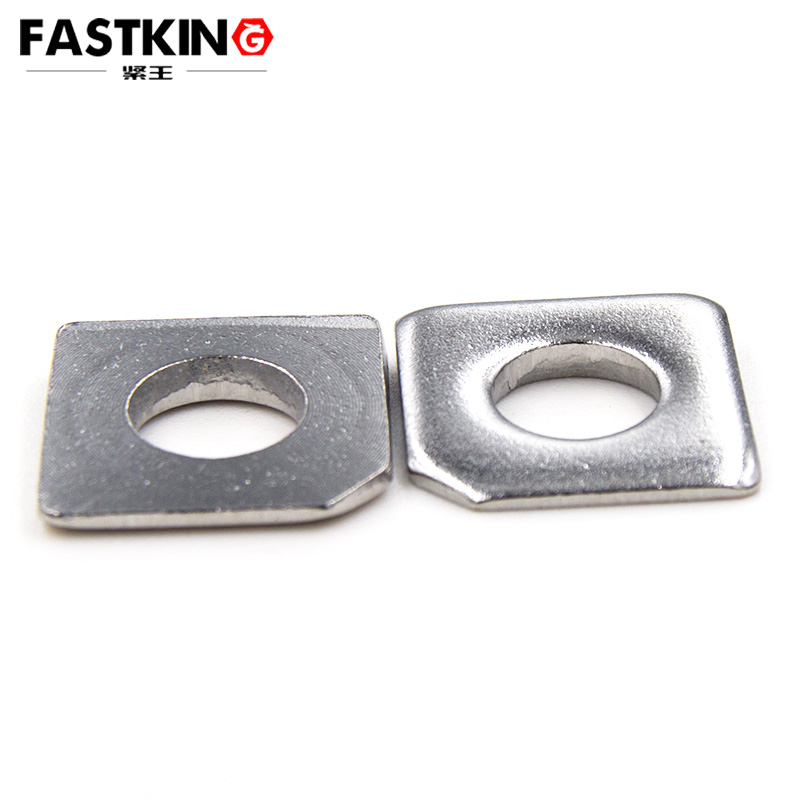
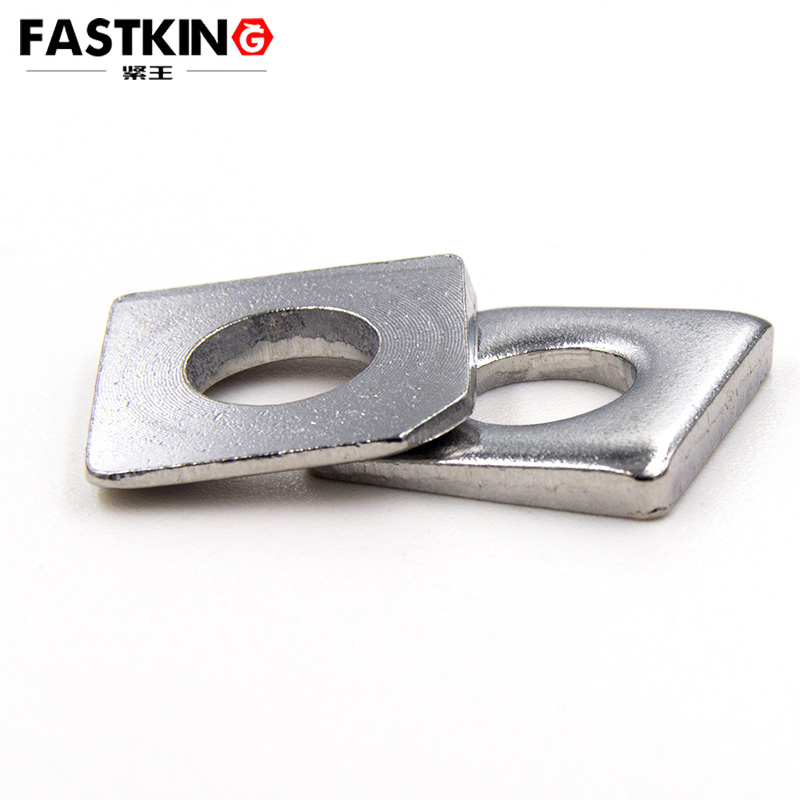
- Product description:Square Taper Washers For Slot Section
In the field of steel structure engineering, channel steel and 304 I-steel are widely used core profiles that bear the load-bearing and supporting needs of scenarios such as construction, machinery, and bridges. However, in the connection process of these profiles, there are two types of seemingly insignificant yet crucial components —— notched flat washers for channel steel and square beveled washers for 304 I-steel. They are not universal standard washers, but "customized accessories" designed for the unique structures of the profiles. With precise shape adaptation and reliable performance, they safeguard the stability, safety, and durability of steel structure connections, serving as the "connection cornerstones" hidden in the steel framework.
From the perspective of structural design, every detail in the shape of notched flat washers for channel steel and square beveled washers for 304 I-steel stems from in-depth adaptation to the profile structure. The cross-section of channel steel is "U"-shaped, with a right-angle transition between its web and flange. If ordinary round flat washers are used, the edge of the washer is prone to creating gaps with the inner side of the channel steel flange, leading to uneven stress during bolt connection and even the risk of washer displacement or detachment. However, based on traditional flat washers, notched flat washers are precisely cut at two right angles corresponding to the inner side of the channel steel flange, forming a "notched" structure that perfectly fits the cross-sectional contour of the channel steel. When bolts pass through the channel steel web and connecting parts, the notched flat washers can be tightly embedded in the "U"-shaped groove of the channel steel. The washer surface is completely attached to the channel steel web, and the edge is seamlessly connected to the inner side of the flange, completely eliminating connection hazards caused by gaps.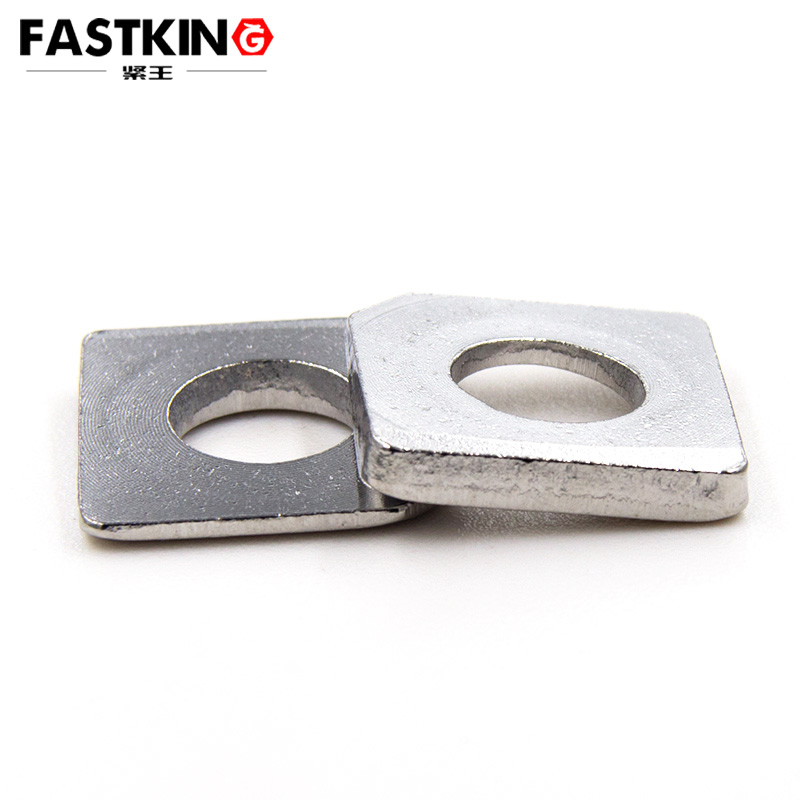
In contrast, the cross-section of 304 I-steel is "I"-shaped. The flanges on both sides of its web are not perpendicular to the web but have a certain inclination angle (known as "flange slope"). This structure is designed to optimize the load-bearing performance of the profile, but it also brings a "leveling challenge" to the connection. Ordinary flat washers have a flat structure; when in contact with the inclined flange of I-steel, they can only form partial point contact or line contact. After the bolts are tightened, pressure concentrates on the contact points, which easily causes deformation of the flange surface or loosening of the bolts due to uneven stress. Square beveled washers, however, adopt a targeted "beveled design" —— the inclination angle of the washer surface is completely consistent with that of the 304 I-steel flange. Meanwhile, the overall square shape can accurately match the width of the I-steel flange. When square beveled washers are installed between the I-steel flange and connecting parts, the beveled surface is tightly attached to the flange, and the flat surface on the other side of the washer remains parallel to the connecting parts. This allows the pressure of the bolts to be evenly transmitted to the entire flange surface, achieving stable "surface contact" connection and fundamentally solving the leveling problem in connecting the inclined flange of I-steel.
In terms of material selection, the material properties of the two types of washers are highly consistent with the needs of their application scenarios. Particularly, the material selection of square beveled washers for 304 I-steel highlights consideration for environmental adaptability. Notched flat washers for channel steel are mostly made of Q235 carbon steel, which has good strength and toughness. Its yield strength matches the mechanical properties of channel steel, enabling it to withstand the pre-tightening force during bolt tightening and the shear force during structural operation. Additionally, it is moderately priced, making it suitable for dry, non-corrosive indoor environments or general outdoor scenarios, such as steel structure frames of workshops and ordinary mechanical supports.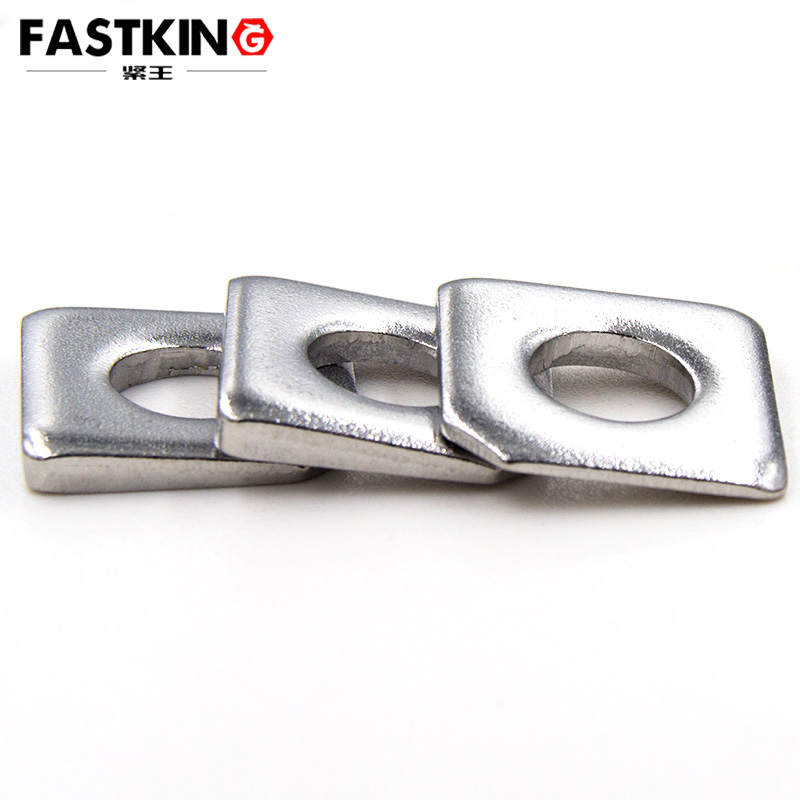
Square beveled washers for 304 I-steel, on the other hand, are generally made of 304 stainless steel. This choice stems from the excellent corrosion resistance and stability of 304 stainless steel. Containing alloying elements such as chromium and nickel, 304 stainless steel can form a dense chromium oxide protective film on its surface, effectively resisting erosion from air, moisture, acid, and alkali media. Even in humid outdoor environments, coastal salt spray environments, or slightly corrosive industrial scenarios, it can prevent connection failure caused by washer rust and corrosion. For example, in the I-steel support structure of cross-sea bridges, 304 square beveled washers can resist salt spray erosion caused by seawater evaporation; in the equipment supports of chemical workshops, they can withstand corrosion from mild chemical gases, ensuring long-term stability of I-steel connection nodes. Furthermore, 304 stainless steel has good processability, allowing it to be precisely pressed into an inclination angle matching the I-steel flange, ensuring the dimensional accuracy and fit of the washers.
From the perspective of functional role, these two types of washers are not only "adaptors" but also "performance enhancers" for steel structure connections. In channel steel connections, notched flat washers eliminate gaps, enabling the even transmission of bolt pre-tightening force to the channel steel web and avoiding web deformation caused by local stress concentration. At the same time, the washers increase the contact area between the bolts and the channel steel, reducing the pressure of the bolts on the channel steel web and preventing the web from being crushed by the bolts. Especially in scenarios with dynamic loads (such as mechanical vibration and impact from vehicle movement), they can effectively improve the fatigue resistance of the connection and extend the service life of the channel steel structure.
In 304 I-steel connections, the "leveling" function of square beveled washers is crucial. Without beveled washers, the inclination of the I-steel flange will cause additional bending moment between the bolt shaft and the connecting parts, and the bolts are prone to fracture under long-term bending moment. However, beveled washers align the bolt axis with the force direction, eliminating the additional bending moment and allowing the bolts to only bear axial tension, significantly improving the load-bearing capacity and safety of the connection. In addition, the corrosion resistance of 304 material can prevent the "rust expansion force" caused by washer corrosion from damaging the connection nodes, ensuring that the I-steel structure does not suffer from safety hazards such as loosening and displacement due to washer failure during long-term use.
From the perspective of industrial application and significance, the emergence of notched flat washers for channel steel and square beveled washers for 304 I-steel reflects the development trend of "refined connection" in steel structure engineering. As modern construction and machinery have increasingly higher requirements for structural accuracy, safety, and durability, universal accessories can no longer meet the connection needs of complex profiles. The application of such "customized washers" has transformed steel structure connections from "forced adaptation" to "precise matching," providing a fundamental guarantee for the safe operation of large-scale projects. For instance, in the steel structure core tube of high-rise buildings, using adaptive washers at the connection nodes of channel steel and I-steel can improve the seismic performance of the overall structure; in the base support of heavy mechanical equipment, precise washers can ensure the levelness and stability of equipment installation, reducing damage to the equipment caused by vibration.
Although small in size, notched flat washers and square beveled washers do not possess the load-bearing capacity of channel steel or the supporting strength of I-steel. Nevertheless, with their precise design, reliable materials, and key functions, they have become an indispensable part of steel structure connections. They have witnessed the transformation of steel structure engineering from extensive construction to refined construction, and with their "adaptation" and "protection," they silently support the safe operation of buildings and equipment. In today's era of pursuing engineering quality and safety, these seemingly ordinary metal accessories are actually the "invisible guardians" of steel structure connections, carrying the engineering community's commitment to details and safety.